Showing posts with label Toronto Heliconian Literary Lecture series. Show all posts

Monday, September 21, 2020

Heliconian 2020 - 2021

It's a bit of an experiment, moving the lectures online. Definitely not the same thing as gathering in the old church , nibbling on cheese and interacting in person. 

I had been debating whether to renew my subscription for the Heliconian since it would be a virtual year, but opted in for the whole season, in support of a good cause. 

Whether I will read all 18 of the books, I'm not so sure, but it will still be fun to check out how the authors approach the lectures.  

Kicking off the lecture series is one of my favourite books from 2019, and the author has agreed to attend my book club in May '21.

...

September 22- K.D. Miller: Late Breaking
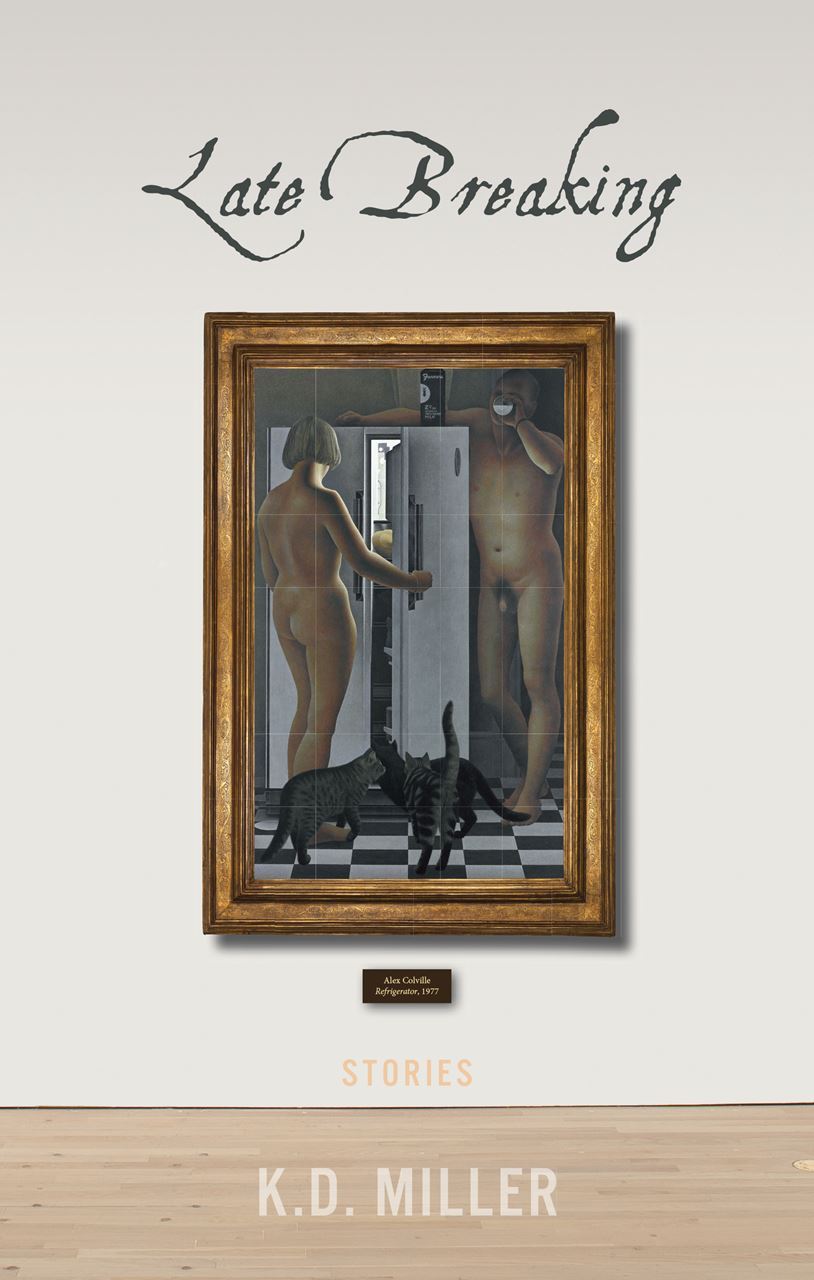
 Inspired by the paintings of Alex Colville, Late Breaking offers a chilling portrait of a small and aging community. The linked stories explore the vulnerability of the elder heart and prove that love and sex and heartbreak are not only the domain of the young. Each character appears in at least two stories, in a greater or lesser role, the most common being a ghost who “haunts” the book throughout. Death is a constant, in both peaceful and violent forms. Together, the stories crystallize into something more than a novel, and confirm its author as one of the country’s best. 

Finalist for the 2019 Governor-General’s Literary Award for Fiction.


September 24- MG Vassanji: A Delhi Obsession
  Two-time Giller Prize winner, M.G. Vassanji, returns with a powerful new novel about grief and second chances, tradition and rebellion, set in vibrant present-day Delhi.            

Munir Khan, a recent widower from Toronto, on a whim decides to visit Delhi, the city of his forbears. Born in Kenya, he has lost all family connections, and has never visited India before. 

While sitting in the bar of the Delhi Recreational Club where he's staying, an attractive woman joins his table to await her husband. A sparring match ensues. The two are from different worlds: Munir is a westernized agnostic of Muslim origin; Mohini, a modern Hindu woman. Utterly witty and charming, she's religiously traditional, but also a liberal and provocative newspaper columnist. Against her better judgment, Mohini agrees to show Munir around the city. What follows is a passionate love affair.

This is a period of rising Indian nationalism in modern India that at times finds outlet in senseless violence. Constantly lurking at Munir's Club is the menacing and foreboding presence of a fanatical nationalist group. To them Munir Khan is simply a Muslim "love-jihadi" who has led the pride of Hindu womanhood, Mohini Singh, astray.

October 6- Steven Price: Lampedusa
In sun-drenched Sicily, among the decadent Italian aristocracy of the late 1950s, Giuseppe Tomasi, the last prince of Lampedusa, struggles to complete the novel that will be his legacy, The Leopard. With a firm devotion to the historical record, Lampedusa leaps effortlessly into the mind of the writer and inhabits the complicated heart of a man facing down the end of his life, struggling to make something of lasting worth, while there is still time. Read The Leopard once you have read Lampedusa. It is considered an Italian masterpiece in its depiction of Sicily in the second half of the 19th century.

Finalist for the 2019 Scotia Giller Prize


October 22- Joan Thomas: Five Wives

 In the tradition of The Poisonwood Bible and State of Wonder, a novel set in the rainforest of Ecuador about five women left behind when their missionary husbands are killed, Five Wives is based on the shocking real-life events

In 1956, a small group of evangelical Christian missionaries and their families journeyed to the rainforest in Ecuador intending to convert the Waorani, a people who had never had contact with the outside world. The plan was known as Operation Auca. After spending days dropping gifts from an aircraft, the five men in the party rashly entered the “intangible zone.” They were all killed, leaving their wives and children to fend for themselves.

 Five Wives is the fictionalized account of the real-life women who were left behind, and their struggles – with grief, with doubt, and with each other – as they continued to pursue their evangelical mission in the face of the explosion of fame that followed their husbands’ deaths.

Winner of the 2019 Governor-General’s Literary Award for Fiction.

November 17- Anthony de Sa: Children of the Moon
 Tanzania, 1956. A Maasai woman gives birth to a child with albinism. The child is seen as a curse upon her tribe, and so begins Pó's tumultuous story. As Pó navigates the world, she must claim her life in the face of violence and ostracism.             

Further south, in Portuguese-controlled Mozambique, Ezequiel struggles for acceptance too. Adopted by missionaries, he is not recognized by his Portuguese father's community, or by his Makonde mother's tribe. When civil war erupts, he must choose who to fight for and who to leave behind.

November 26- Cary Fagan: The Student
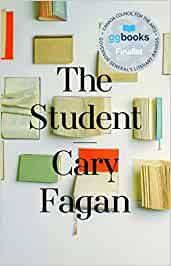
 A portrait of a life in two snapshots.

It’s 1957 and Miriam Moscowitz is starting her final year of university with unwavering ambition. She is a passionate student who studies hard, dates a handsome Jewish man with a good job, and is the apple of her father’s eye (and worry of her mother’s). But when a meeting with a professor she admires turns sour, her dreams of a life immersed in literature are extinguished and—perhaps for the first time—she becomes unsure of how to break a path for herself.

It’s 2005 and Miriam is readying her backyard for a wedding. She picks up one of her books from 1957 and reads the marginalia written in her young, minuscule handwriting. She wonders what the young person who had written all these words almost half a century ago has to do with the older woman who is deciphering them now.

The Student is a compassionate and compelling novel that brings together two pivotal times in history. In beautiful prose, it reveals how we are shaped by – and try to overcome – the constraints of our times. 

Finalist for the 2019 Governor-General’s Literary Award for Fiction

January 26- Mike Barnes: Be With: Letters to a Caregiver
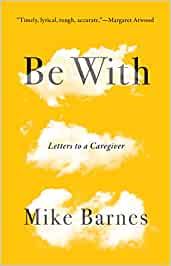
  Drawing on the author’s seven years of caring for his mother through Alzheimer’s, Be With: Letters to a Caregiver is what its title promises: four dispatches to an anonymous long-term caregiver. In brief passages that cast fresh light on what it means to live with dementia, Barnes shares trials, insights, solace—and, ultimately, inspiration.

Mike Barnes writes with sensitivity and grace about fellowship, responsibility, and joyful relatedness—what it means to simply be with the people that we love.

Shortlisted for the Toronto Book Award

January 28- Jesse Thistle: From the Ashes: My Story of Being Métis, Homeless and Finding My Way

In this extraordinary and inspiring debut memoir, Jesse Thistle, once a high school dropout and now a rising Indigenous scholar, chronicles his life on the streets and how he overcame trauma and addiction to discover the truth about who he is.

Abandoned by his parents as a toddler, Jesse Thistle briefly found himself in the foster-care system with his two brothers, cut off from all they had known. Eventually the children landed in the home of their paternal grandparents, whose tough-love attitudes quickly resulted in conflicts. Throughout it all, the ghost of Jesse’s drug-addicted father haunted the halls of the house and the memories of every family member. Struggling with all that had happened, Jesse succumbed to a self-destructive cycle of drug and alcohol addiction and petty crime, spending more than a decade on and off the streets, often homeless. Finally, he realized he would die unless he turned his life around.

Through sheer perseverance and education—and newfound love—he found his way back into the circle of his Indigenous culture and family.

An eloquent exploration of the impact of prejudice and racism, From the Ashes is, in the end, about how love and support can help us find happiness despite the odds.

Finalist for CBC Reads and Indigenous Voices Awards   

February 16 -Gil Adamson: The Ridgerunner
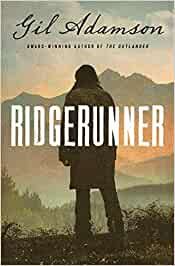
Part literary Western and part historical mystery, Ridgerunner is the sequel to Gil Adamson’s award-winning and critically acclaimed novel The Outlander.

November 1917. William Moreland is in mid-flight. After nearly twenty years, the notorious thief, known as the Ridgerunner, has returned. Moving through the Rocky Mountains and across the border to Montana, the solitary drifter, impoverished in means and aged beyond his years, is also a widower and a father. He is determined to steal enough money to secure the future of his son who has been left in the care of Sister Beatrice, a formidable nun, who keeps him in cloistered seclusion in her grand old house. Though he knows his father is coming for him, the boy runs away to the family’s cabin deep in the wood and takes with him something the nun is determined to get back — at any cost.

The novel is set against the backdrop of a distant war raging in Europe and a rapidly changing landscape in the West.

February 25- Derek Mascarenhas: Coconut Dreams
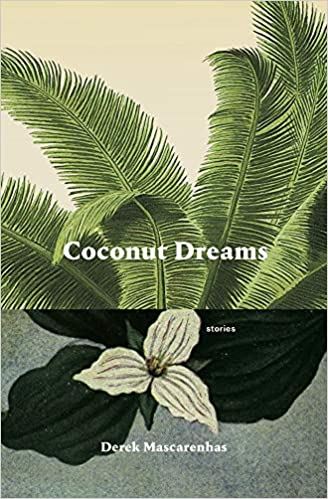
 Coconut Dreams explores the lives of the Pinto family through seventeen linked short stories. Starting with a ghost story set in Goa, India in the 1950s, the collection weaves through various timelines and perspectives to focus on two children, Aiden and Ally Pinto. These siblings tackle their adventures in a predominantly white suburb with innocence, intelligence and a timid foot in two distinct cultures. Derek Mascarenhas takes a fresh look at the world of the new immigrant and the South Asian experience in Canada.

In these stories, a daughter questions her father’s love at an IKEA grand opening; an aunt remembers a safari-gone-wrong in Kenya; an uncle’s unrequited love is confronted at a Goan Association picnic; a boy tests his faith amidst a school-yard brawl; and a childhood love letter is exchanged during the building of a backyard deck. Singularly and collectively, these stories will move the reader with their engaging narratives and authentic voices

March 4- Carla Gunn: Amphibian
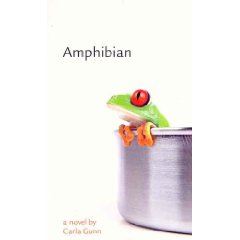
 Nine-year-old Phineas William Walsh has an encyclopedic knowledge of the natural world. He knows that if you wet a dog's food with your saliva and he refuses to eat it then he's top dog, and he knows that dolphins can sleep half a brain at a time. What he doesn't know, though, is why his grandfather died, or why waste-of-flesh Lyle always picks on him. Or why his parents can't live together - after all, when other mate-for-life animals have a fight, it's not like one of them just packs his bags and leaves the country. To make it infinitely worse, he's worried sick about what humans are doing to the planet, and his mother is worried sick about him. But shouldn't everyone be losing sleep over the fact that a quarter of all Earth's mammals are on the Red List of Threatened Species? So, when a White's tree frog ends up in an aquarium in his fourth-grade classroom, it's the last straw, and he and his best friend, Bird, are spurred to action.

Finalist for the Commonwealth Writers’ Prize for Best First Book, (Canada and the Caribbean Region)

March 23- Karma Brown: Recipe For a Perfect Wife
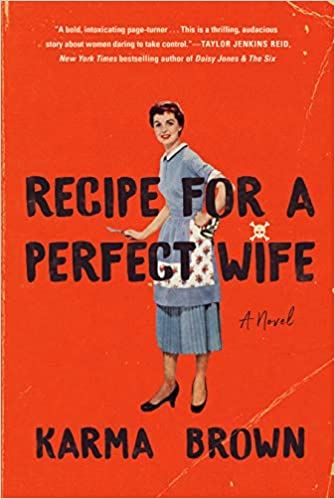
In this captivating dual narrative novel, a modern-day woman finds inspiration in hidden notes left by her home’s previous owner, a quintessential 1950s housewife. As she discovers remarkable parallels between this woman’s life and her own, it causes her to question the foundation of her own relationship with her husband–and what it means to be a wife fighting for her place in a patriarchal society.

When Alice Hale leaves a career in publicity to become a writer and follows her husband to the New York suburbs, she is unaccustomed to filling her days alone in a big, empty house. But when she finds a vintage cookbook buried in a box in the old home’s basement, she is captivated by the cookbook’s previous owner–1950s housewife Nellie Murdoch. As Alice cooks her way through the past, she realizes that within the cookbook’s pages Nellie left clues about her life–including a mysterious series of unsent letters penned to her mother. Soon Alice learns that while baked Alaska and meatloaf five ways may seem harmless, Nellie’s secrets may have been anything but.

April 13- Ben Lerner: The Topeka School with Sandra Martin
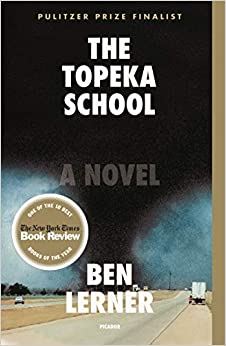
 Adam Gordon is a senior at Topeka High School, class of 1997. His mother, Jane, is a famous feminist author; his father, Jonathan, is an expert at getting "lost boys" to open up. They both work at the Foundation, a well-known psychiatric clinic that has attracted staff and patients from around the world. Adam is also one of the seniors who brings the loner Darren Eberheart--who is, unbeknownst to Adam, his father's patient--into the social scene, with disastrous effects.

This is the story of a family's struggles and strengths: Jane's reckoning with the legacy of an abusive father, Jonathan's marital transgressions, the challenge of raising a good son in a culture of toxic masculinity. It is also a riveting prehistory of the present: the collapse of public speech, the trolls and tyrants of the new right, and the ongoing crisis of identity among white men.

A Finalist for the 2020 Pulitzer Prize for Fiction and a Barack Obama’s Top Pick.

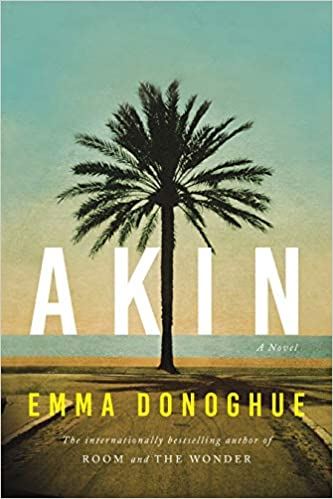
April 15- Emma Donoghue: Akin
A personal note: Akin is my only book to grow out of a particular place: it’s inspired by the two years (2011-12 and 2015-16) I spent with my French partner and our children in Nice. Despite having a degree in French and English, over the decades I’ve consistently failed to become fluent in French, so this novel is a sort of apologetic love-letter to the country that intrigues me so deeply, where I will always be a stranger. I chose New York as the place where Noah’s family would end up not only because it was an obvious choice for people involved in the art world, but because my father the literary critic Denis Donoghue taught at NYU from the late seventies to the early 2010s, and the one year I spent in that city at the age of nine was eye-opening in every way.

The story of Noah’s mother was prompted by the wartime experiences of Marguerite Matisse Duthuit, daughter to the painter who lived in Nice for so long, which I learned about in Hilary Spurling’s extraordinary biography Matisse: The Life. But I decided to make Noah’s grandfather a photographer instead, because that could be called the key twentieth-century art form, and because photographs (pre-digital) have such uncanny power as evidence. My image-maker friend Margaret Lonergan created some of Margot’s photos for me to include in the book, as well as designing the cover from a 1930s shot of the Promenade des Anglais by Swiss photographer Martin Hürlimann.

May 11- Jessica McDiarmid: Highway of Tears
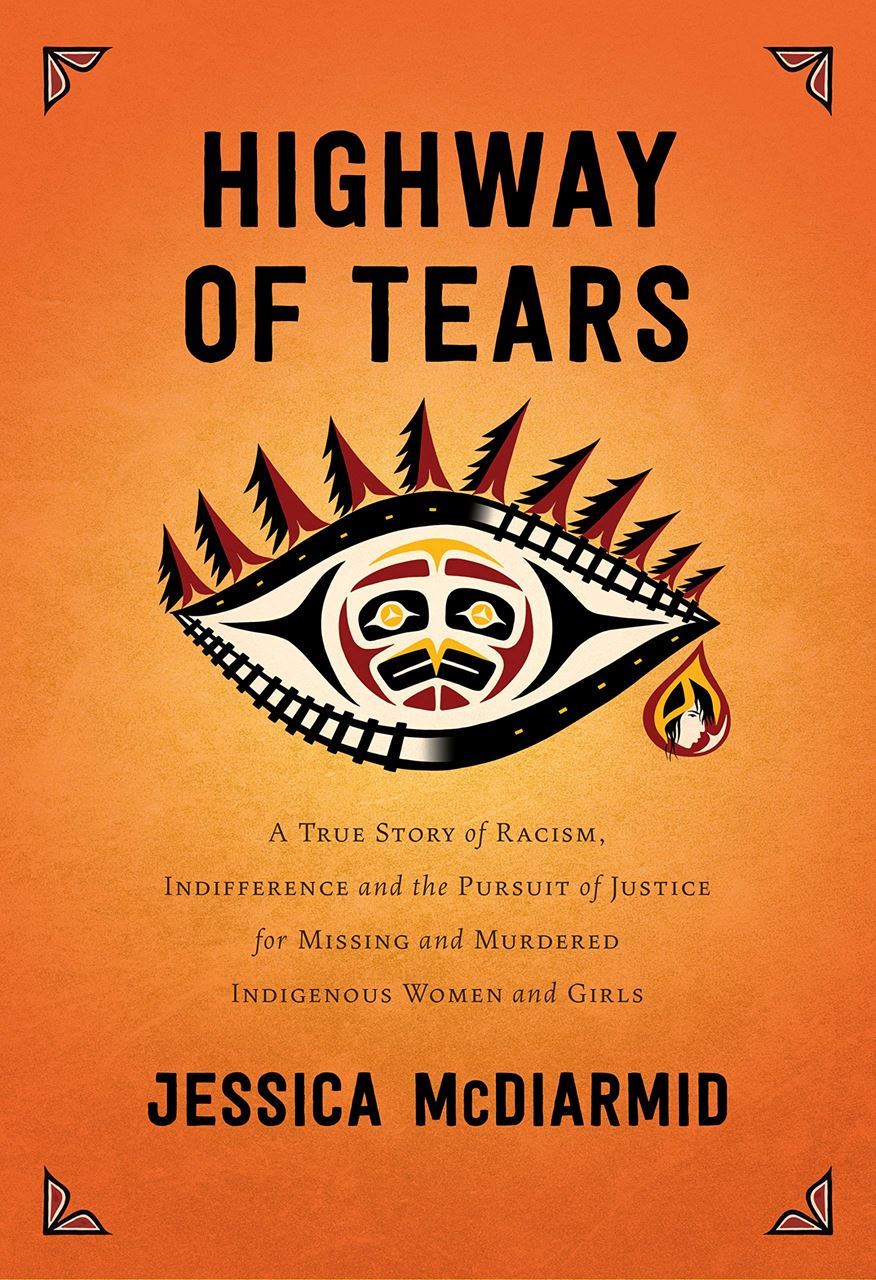
For decades, Indigenous women and girls have gone missing or been found murdered along an isolated stretch of highway in northwestern British Columbia. Highway 16 is known as the Highway of Tears, and it has come to symbolize a national crisis.

Journalist Jessica McDiarmid, investigates the devastating effect these tragedies have had on the families of the victims and their communities, and how systemic racism and indifference have created a climate where Indigenous women and girls are over-policed, yet under-protected.      

 Through interviews with mothers and fathers, siblings and friends, McDiarmid offers an intimate, first-hand account of their loss and relentless fight for justice. Examining the historically fraught social and cultural tensions between settlers and Indigenous peoples in the region, McDiarmid links these cases to others across Canada - now estimated to number up to 4,000. 

Finalist for the 2020 RBC Taylor Prize for Non-Fiction

May 13- Linden MacIntyre: The Wake
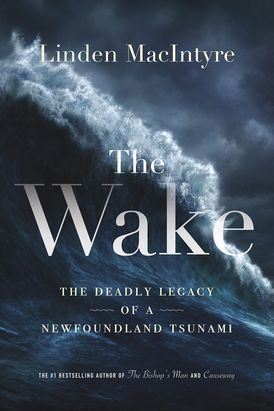
On November 18, 1929, a tsunami struck Newfoundland’s Burin Peninsula. Giant waves up to three storeys high hit the coast at a hundred kilometres per hour, flooding dozens of communities and washing entire houses out to sea. The most destructive earthquake-related event in Newfoundland’s history, the disaster killed twenty-eight people and left hundreds more homeless or destitute. It took days for the outside world to find out about the death and damage caused by the tsunami, which forever changed the lives of the inhabitants of the fishing outports along the Burin Peninsula.

Scotiabank Giller Prize–winning writer Linden MacIntyre was born near St. Lawrence, Newfoundland, one of the villages virtually destroyed by the tsunami. By the time of his birth, the cod-fishing industry lay in ruins and the village had become a mining town. MacIntyre’s father, lured from Cape Breton to Newfoundland by a steady salary, worked in St. Lawrence in an underground mine that was later found to be radioactive. Hundreds of miners would die; hundreds more would struggle through shortened lives profoundly compromised by lung diseases ranging from silicosis and bronchitis to cancer. As MacIntyre says, though the tsunami killed twenty-eight people in 1929, it would claim hundreds if not thousands more in the decades to follow. And by the time the village returned to its roots and set up as a cod fishery once again, the stocks in the Grand Banks had plummeted and St. Lawrence found itself once again on the brink of disaster.

CBC and Globe and Mail Best Book of the Year

June 8- Helen Humphreys: Rabbit Foot Bill
 Canwood, Saskatchewan, 1947. Leonard Flint, a lonely boy in a small farming town befriends the local tramp, a man known as Rabbit Foot Bill. Bill doesn’t talk much, but he allows Leonard to accompany him as he sets rabbit snares and to visit his small, secluded dwelling. 

Being with Bill is everything to young Leonard—an escape from school, bullies and a hard father. So his shock is absolute when he witnesses Bill commit a sudden violent act and loses him to prison.

 Fifteen years on, as a newly graduated doctor of psychiatry, Leonard arrives at the Weyburn Mental Hospital, both excited and intimidated by the massive institution known for its experimental LSD trials. To Leonard’s great surprise, at the Weyburn he is reunited with Bill and soon becomes fixated on discovering what happened on that fateful day in 1947.

Based on a true story, this page-turning novel from a master stylist examines the frailty and resilience of the human mind.

June 10- Olga Tokarczuk: Drive Your Plow Over the Bones of the Dead with Suanne Kelman.

In a remote Polish village, Janina devotes the dark winter days to studying astrology, translating the poetry of William Blake, and taking care of the summer homes of wealthy Warsaw residents. Her reputation as a crank and a recluse is amplified by her not-so-secret preference for the company of animals over humans. 

Then a neighbour, Big Foot, turns up dead. Soon other bodies are discovered, in increasingly strange circumstances. As suspicions mount, Janina inserts herself into the investigation, certain that she knows whodunit. If only anyone would pay her mind... 

A deeply satisfying thriller cum fairy tale, Drive Your Plow over the Bones of the Dead is a provocative exploration of the murky borderland between sanity and madness, justice and tradition, autonomy and fate. Whom do we deem sane? Who is worthy of a voice? 

Finalist for the International Booker Prize and the National Book Award for Translation


Wednesday, July 15, 2020

Heliconian 2019-2020


I value the opportunity to hear authors speak firsthand about their work and creative process because it brings me a deeper appreciation for the text. The Heliconian Lectures are just such an opportunity to slow down to more deeply process the words on the page as well as the effort and the insights that bring them shape. In the cases where the author's work is explored by another, it's the occasion to appreciate a layered point of view.

The Hall is a beautiful space. I enjoy the changing gallery of art on the walls, I like a front row seat, the cheese and crackers beforehand are a nice little treat. More than anything it's also good to go with a friend and talk a little bit more on the way home about what we heard... how different statements resonate (or don't). Kaarina has been my date these last several years and I enjoy her take on the lectures. This year we signed up for Thursdays:

This year the Heliconian Lectures were interrupted by Covid and several authors presented online. It was a bit disappointing at first, even though the recordings still afforded the same chance to gain a better understanding of the works... just not in the same way. Some of the presenters were obviously uncomfortable in the new format. My favourite was Michael Crummy, who took the 'audience' into his writing environment and acted as though it was a realtime presentation.
 
in person....
Kerri Sakamoto: Floating City (September)
Sarah Henstra: The Red Word (October)
Helen Humphreys: Machine Without Horses (November)
Judy Rebick: Heroes In My Head: A Memoir (January)
David Bezmozgis: Immigrant City (February)

interrupted 
~ Available Online  May/June ~
Tamara Faith Berger: Queen Solomon​
Sandra Martin on Sally Rooney: Normal People  
Suanne Kelmann on Patrick Radden Keefe: Say Nothing: A True Story of Murder and Memory in Northern Ireland  
Michael Crummey: The Innocents

to be continued....
October 8: Jennifer Robson: The Gown
November 5:Cecil Foster: They Call Me George: The Untold Story of Black Train Porters and The Birth of Modern Canada

Tuesday, June 18, 2019

Heliconian 2018-2019


This year's Heliconian was a great mix of authors known and unknown to me.

I continue to get there early enough to nab front row seats for the author talk. Sometimes having read the book beforehand and other times just arriving with the best of intentions.

I do enjoy hearing about the writers' process for getting words on paper. The imagining of ancestors' lives (Linda Spalding and Kim Thuy); a collaborative theatre-based approach (Catherine Hernandez); lived experience (Sileika); bringing characters to life based on current events (MacIntyre); passionately advocating for social change (Talaga).

And I do love Toronto! And to see it central to the plots and unfolding of several novels, unapologetically itself (The Only Cafe, The Barefoot Bingo Caller, Scarborough).

October: Michelle Winters, I am A Truck
November: Tanya Talaga, Seven Fallen Feathers
December: Linda Spalding, The Reckoning
January: Linden MacIntyre, The Only Cafe
February: Antanas Sileika, The Barefoot Bingo Caller 
April: Kim Thuy, VI
May: Sharon Bala, The Boat People
May: Catherine Hernandez, Scarborough
June:  Suanne Kelman speaking about Min Jin Lee's Pachinko

Monday, June 25, 2018

Heliconian

Missed a few of the lectures this year, but was also able to take in a Thursday night when Cheryl had an extra ticket to spare.
Although I hadn't read some of the books I was still able to enjoy insights into the writers' creative process or approach to their work. Many of the books I hadn't read were added to my 'must read' list. 
Next year, it is the Thursday night series!
Tuesday, Sept. 5 Alexandra Reisen: Unearthed Love, Acceptance, and Other Lessons from an Abandoned Garden
Thursday, Sept. 14 Gary Barwin: Yiddish for Pirates
Tuesday, Oct. 24 Kevin Patterson: News From the Red Desert
Tuesday, Nov. 7 Wayne Johnston: First Snow, Last Light
Tuesday, Jan. 9 Zoe Whittall: The Best Kind of People
Tuesday, Feb. 27 Iain Reid: I’m Thinking of Ending Things
Tuesday, March 6 Janie Cheng: Dragon Springs Road
Tuesday, April 10 Rachel Cusk (Speaker Sandra Martin): Outline; Transit
Tuesday, May 8 Anosh Irani: The Parcel
Tuesday, June 5 Moshid Hamid (Speaker Suanne Kelman): Exit West

Saturday, June 10, 2017

Heliconian Series 2016 / 2017


Every time I go to a Heliconian lecture I learn something new.

The organizers line up great lecturers, authors and books, and I'm already looking forward to seeing what's in store next year.


WHENSPEAKERAUTHORBOOK
Tues, Sep 13Sandra MartinSandra MartinA Good Death
Tues, Oct 25Peter BehrensPeter BehrensCarry Me
Tues, Nov 22Kim ThuyKim ThuyMan
Tues, Jan 10Ian BrownIan BrownSixty
Tues, Feb 7Terry FallisTerry FallisPoles Apart
Tues, Mar 7Nazneen SheikhNazneen SheikhThe Place of Shining Light
Tues, Apr 18Cecilia EkbackCecilia EkbackWolf Winter
Tues, May 9Suanne KelmanAnthony MarraThe Tsar of Love and Techno
Tues, Jun 6Ann Y K ChoiAnn Y K ChoiKay’s Lucky Coin Variety
Sandra Martin spoke about the struggle of many who are diagnosed with incurable and painful diseases. Individuals and families suffer under the burden of costs and intolerable pain. Canada has made some changes in Right to Die legislation many see as progress, some see as timid, and others see as chilling. If you suffer with an incurable disease, the debate becomes less theoretical. Even after legislative changes, many people leave the country for assisted deaths and others plead unsuccessfully for an end to their suffering.

Peter Behrens spoke about concentration camps in England during the second world war, something I'd never heard of before. And at the end of the war, many Germans were deported, even though they didn't speak or write any German whatsoever. The author drew on his own family history to create the work of fiction, Carry Me. 

Man was such a lyrical book, thin, but very 'heavy' in its themes. What a surprise to see Kim Thuy present. She was hilarious in recounting events in the story and could have done stand-up with her bitter-sweet humour. Such a contrast. The same stories but with such different flavours.

Sheikh was interesting to hear, because she spoke of optioning the book and poking international producers with suggestions for directors and actors. From Afghanistan to Pakistan, the novel braids the story of three men in the pursuit of a stolen Buddhist statue. The author was quite a character herself, with a flair for the dramatic and an air of privilege. I'm more inclined to read her memoir than the novel.

Wolf Winter was a fabulous story. The blunt ending frustrated me and delighted at the same time. I was so looking forward to seeing Cecilia Ekback, but she opted out of the arrangement, and organizers looked for a substitute. We were lucky to have Margaret Cannon, the mystery writing critic at the Globe and Mail step in. Although she liked the Girl with the Dragon Tattoo, she didn't appreciate its sequel and refuses to read any book with 'the girl' as part of its title. Margaret reads at least five books a week in order to produce her monthly reviews, and is well qualified to set the novel in context. Her verdict is that Ekback's debut novel reveals an astonishing talent.

Suanne Kelman was the guest lecturer for  the Tsar of Love and Techno, and played the music tracks referenced in the book. This was a first for me at the Heliconian. I really appreciated the effort and thought of the many books I read that reference music - how fun it would be to find or make a playlist to add another dimension to the experience.

Ann Y K Choi was charming. I really liked the book Kay’s Lucky Coin Variety.  Choi revealed her struggles with depression, and how therapists encouraged her to write as a way to heal herself. She grew up hating being Korean but is now learning to reclaim her heritage. At the Korean Authors' Association, she needed a translator because her Korean was so poor, so now she is trying to learn to speak the language she spurned in her childhood. She recently found herself in a Korean language class surrounded by young white kids who wanted to learn Korean because it was 'cool,'  and couldn't believe how times had changed. Her editor, Phyllis Bruce, had come to offer support and sat in the audience. Bruce is a recipient of the Order of Canada and has edited many outstanding novels - she even had her own imprint at Simon and Schuster and was a publisher at Harper Collins. Which makes me want to explore the Bruce's titles all the more....

This year, I was especially looking forward to hearing Ian Brown and Terry Fallis. In fact, they were the reason I chose the Tuesday night series. Unfortunately, those were the two nights I had to miss. For Poles Apart, Rob and I were in Hawaii, and at Sixty, I had a work engagement. Rob ended up going to see Ian Brown as Kaarina's date, and took my copy of the book for Ian to sign. Rob also ended up being my date on two other occasions... I got a kick out of seeing him in this hall of older women and seeing them sneak a sideways glance.

Saturday, June 18, 2016

Heliconian Tuesdays

The Heliconian Literary Lecture Series has been billed as a cross between a traditional book club and university course without exams. What I appreciate is the opportunity to hear authors speak about their books, in an intimate setting. 

There were some memorable moments this year
… watching Linden MacIntyre charm the room and hearing his perspective on the upcoming federal election (he was careful not to name names and prefaced statements with the fact that he didn’t have an opinion, but if he did…)
… seeing Julian Porter graciously try to save the day when a wonky projector bulb refused to display red, turning the reproductions of his favourite paintings a ghastly hue
… listening to Catherine Gildner’s verbal retelling of events in her memoir, and realizing the details were sometimes a bit different than what was published (I guess that what is meant by “truthy”)
… enjoying the voice of Elizabeth Hay as she spoke about building her characters and settings
… realizing Michael Crummey was also a very fine poet, and hearing him read from his latest collection
… learning more about JFK and his speech writer "Ted" Sorensen from Andrew Cohen
… travelling vicariously with Kathleen Winter aboard a ship as she journeyed along the legendary Northwest Passage
... meeting Jane Urquhart before her on-stage conversation with Sandra Martin (well, actually, I didn't quite know for sure who the person was that filled my water glass, but she looked familiar!) 


WHEN
SPEAKER
AUTHOR
BOOK
Tues, Sep 29
Linden MacIntyre
Linden MacIntyre
Punishment
Tues, Oct 20
Julian Porter
Julian Porter
149 Paintings You Really Need to See in Europe
Tues, Nov 10
Catherine Gildiner
Catherine Gildiner
Coming Ashore
Tues, Jan 19
Lynn Thomson
Lynn Thomson
Birding With Yeats
Tues, Feb 23
Elizabeth Hay
Elizabeth Hay
His Whole Life
Tues, Mar 22
Kathleen Winter
Kathleen Winter
Boundless
Tues, Apr 12
Michael Crummey
Michael Crummey
Sweetland
Tues, May 10
Andrew Cohen
Andrew Cohen
Two Days in June
Tues, Jun 7
Sandra Martin
Thomas King
The Back of the Turtle

Monday, November 16, 2015

Heliconian Lecture Series


Kaarina and I signed up for the Heliconian lectures again, enjoying the opportunity to hear authors talk about their work. The popular series has been described as a "cross between a traditional book club and university course without exams." The audience is mostly female, and mostly older. The writers speak for about an hour, often sharing a bit about their process, and then take questions for 15 minutes. So far, they've all been great talks and fabulous books.

Lyndon MacIntyre spoke about Punishment in September, and charmed the crowd. It was prior to the federal election, and he pointedly spoke about not speaking about politics and a certain incumbent.  He also talked about one of the threads in the book that hadn't resonated with me when I read it, which was the Iraq war and how international incidents were entwined at the local level. Many layers to the story. The idea came to him as he sat on his porch in Cape Breton, and I easily envisioned him writing in a breezy uncluttered room with a view of the ocean.

Julian Porter talked about 149 Paintings You Really Need to See in Europe (So You Can Ignore the Others). This was the first time a projector made its way into the proceedings, and it didn't go well. Unfortunately, the red hue was missing, and so many of the masterpieces looked alarmingly cool. To his credit, Julian kept his cool, but you could tell he was a bit frustrated when he couldn't share the depth of colour of some of his favourites.  Obviously passionate about many artworks, it was great to hear not only about the individual works, but his approach to enjoying them over the years: be discriminating and don't try to take in everything at a gallery, zero in on a few and linger.  Good advice. He's working on a similar book, about paintings to see in North America, and highly recommended Pittsburgh for the Carnegie Gallery. Since the Warhol Museum is also there, it could be a fun trip!

Catherine Gildiner retold anecdotes from her memoir, Coming Ashore. The third in a series, it focuses on her early twenties, a time without kids and mortgages and careers. It is hilarious with recounting anecdotes from her time at Oxford, such as scheming to help a friend loose her virginity to Jimi Hendrix and studying as a PHD student while living in the druggie haven Rochdale during it's heyday of the early 70s. When I was reading the book I wondered if it was literally true, or true in the sense of Isabelle Allende and others who say it is sometimes necessary to lie to tell the truth. Catherine's retelling that night sometimes strayed from the details in the book, and then she talked about her writing process aiming to connect with the unconscious, so I don't think all the details are necessarily factual. But does it matter? It is a great read and seems true in the telling.

Wednesday, September 8, 2010

The Bishop's Man


Sometimes it is unclear exactly what is going on; you suspect; there are veiled references.  Shadows, things unsaid, you don’t quite trust your interpretation of events.  Given the plotline in The Bishop's Man, this technique draws you right into the story.

Tonight at the Heliconian Lecture Series, MacIntyre couldn't stop moving the entire time he was at the podium. He was gesticulating with his hands and his legs were constantly in a slow jig. His voice still has the soft, pleasing lilt of someone who has grown up on the East Coast.

Hawthorne was to be the original title of the book, in reference to the place and to Christ's crown of thorns. The editor, Ann Collins, convinced MacIntyre The Bishop's Man would be a better hook. She also made several suggestions the author said opened up the story for him.

I had a chance to ask Linden MacIntryre if it was intentional the Bishop's Man, Duncan MacAskill, seemed to systematically break each of the seven deadly sins and most of the ten commandments.  The author seemed genuinely surprised by the question, as it was the sins of the Church itself that were the worst iniquities.  The sins of the abusers were multiplied by the amoral institution.  He talked about the difference between sexual assualt and sexual abuse.  Abuse usually involving the ongoing exploitation of someone in a position of trust, over someone with less power.  How the Church was complicit and enabled abuse with a policy that transferred offenders from one location to another, covering things up and keeping things quiet.

When we discussed this at the Book Babes August meeting, every person around the table had a passionate reaction.  To say there were differences of opinion about the culpability of the Bishop's Man would be putting it mildly.

Born Catholic, I connect with a lot that is written. As a kid there was a period I went to mass every day, intent on becoming a priest.  Like many in my generation I turned away from the Church as an institution as I grew older.

I also connect with the landscape - it is filled with water.

There are so many references to boats:  MacAskill buys a boat and tries to learn to pilot it.  Boats are in the foreground in phrases like "There was a froth of water churning at the stern, a graceful wake opening behind her like a bridal train".  The boats dot the scenery, and they're metaphors for character descriptions:  “white teeth flashing like the froth of a distant boat."

And death comes on or near  boats:  suicides and murders.

MacIntyre writes when he feels like it.  He says he is far more productive between the hours of 5-9 than 9-5.  When he is working on a story he is thinking about it all the time, not just when he is writing. He gave up carrying around a notebook to write down phrases that pleased him as they occurred , figuring if he couldn't remember them later it probably wasn't memorable in the first place.  One of the hardest parts of writing for him is the 'unwriting', like when he came to the realization that the 30 page prologue he'd laboured over just had to go because it wasn't adding to the story.

Growing up he excelled at composition in school, people often telling him he had a way with words. In university, he was told (by a priest) that he wasn't 'creative enough' to work in fiction. He ended up pursuing journalism in the early days, when it was considered 'reporting' and was something people fell into with little or no training.  He rose to the top of his profession and has become one of Canada's most trusted broadcasters.

I enjoyed hearing a bit of background about the Gillers.  MacIntyre was surprised to be longlisted, and even more so to be shortlisted.  He accepted his red rose and formal invitation to attend the awards in person, knowing he was a long shot to win (press pegged him second-to-last as a contender).  He enjoyed his drinks, feeling confident that although there was a remote mathematical possibility he would win, he needn't be prepared with a speech.  When they announced his name, his brain was completely dead, he had nothing to say, and he can't remember a word he said to this day.  He still refuses to watch any recordings of the ceremony, convinced he'll be doing justice to the phrase "drunken Irishman".


Wednesday, March 10, 2010

Winter Vault

This book is filled with engrossing facts about geography, history, engineering and music. The author said it was a privilege to be able to feed her interests as she researched her novels.  Facts were quick to uncover, but "the meaning that lies within the facts takes much longer to reveal".
Perhaps we painted on our own skin, with ochre and charcoal, long before we painted on stone.  In any case, forty thousand years ago, we left painted handprints on the cave walls of Lascaux, Ardennes, Chauvet.
     The black pigment used to paint the animals at Lascaux was made of manganese dioxide and ground quartz; and almost half the mixture was calcium phosphate.  Calcium phosphate is produced by heating bone four hundred degrees Celsius, then grinding it.
     We made our paints from the bones of the animals we painted.
     No image forgets this origin.
from The Winter Vault, by Anne Michaels 
Rushing through this book would be like speed-reading haiku.  You can do it, but it defeats the purpose.  Better to read this one slowly.  The author was published as a poet before she was a novelist, so there is deep love of language, metaphor, and pattern.

In this last lecture of the Wednesday night series at the Heliconian Club, the author was interviewed on stage by Suanne Kelman, an Associate Chair at Ryerson. Kelman told Michaels she felt the book was "dark" and filled with "despair".  Although the writer admitted darkness was a strong element in the story, she said, "Regret, shame, grief... these things are not the end of the story".  In fact, she hoped the reader would come away from the book with the realization that "everything made with love is alive", and feel empowerment and hope.

I found it interesting to hear her speak about trying to balance her life as a mother and as a writer without compromise.  She did this by writing each day between 1 a.m. and 5 a.m.  Maybe this is why there is such a dream-like quality to her work.

Lisa Ray interviews Anne Michaels about the Winter Vault after it was nominated for the Giller Prize:


Wednesday, January 20, 2010

Barnacle Love

Loved,  loved, Barnacle Love by Anthony De Sa and loved the lecture, too.

Promoted as a series of 'linked stories' the book really reads more like a novel, with the first half focusing on the tale of Manuel's journey to Canada from the Azores and the second half told from the point of view of the Canadian-born son.

I wondered how the young idealistic man of dreams in the first half of the novel degenerated into the bitter, drunken father of the second half.  There is not much explanation in the book itself, which is why the lecture was so interesting.

Tonight the author read from his paper, The Need to Look Back, and provided some personal insights into the immigrant experience that helped explain Manuel's transition.   Consider the pressures of being among the first wave of immigrants from the Azores to Canada in the mid 1950s:  not having the luxury of a 'little Portugal' retreat to speak with bankers and grocers in your mother tongue; the sheer politics of needing to choose the order of the relatives you are sponsoring to come to Canada; and the deep fissures that could erupt when you picked your mother-in-law over siblings.

Sponsorship was a deep, long-term commitment, you needed to provide food, shelter and help the newcomers establish themselves over several months, and then the cycle would begin again.  Until all the family members are brought over.  You're working 2 or 3 jobs to meet financial obligations, going without so others can prosper.  It would be natural to feel that all the sacrifice would be recorded with the expectation of a debt to be repaid.  Yet this feeling of entitlement often alienated the people that were sponsored. The feeling of indebtedness and guilt could separate generations.  In the end the people that made these sacrifices for their families were often left isolated, unappreciated and the object of scorn.

De Sa has had other second generation Canadians tell him the story rings true from their family experience, too.  So in that sense, the story is not just limited to the Portuguese experience of the 1950s/1970s, but the immigrant experience in general.  I'd say the theme of indebtedness from one generation to the next is pretty universal.

There was also the mention of married people that would leave families back home, come to Canada with the intention of working here and then sponsoring their wives and children, but along the way they fall in love and start second families in their new country.  What could happen when those worlds collide?

Even without the backstory,  the book itself is well worth the time spent.  I'm looking forward to the next one, Carnival of Desire  and reading the author blog about his progress as the due date approaches.

Thursday, January 7, 2010

Origin of the Species

Quite possibly my favourite sentence in the book:

"...it made him feel like some bumbling, cunt-addled oaf from an Atwood novel."

Aside from coining such an exquisite word, it's also the perfect distillation for the character of the story's main protagonist, Alex.  He really isn't very likable, but I guess that is beside the point.  The real question is, given the title of the book... does his character evolve?  Certainly not in an obvious way.  There is no third eye sprouting or sudden epiphany. A quick poll of 3 readers waiting to get the book signed was a unanimous 'no', but when I asked Ricci if Alex evolved in the story, he said yes. Who am I to argue with the author and Governor General award winner?

The story is told a bit out of sequence, with the Galapogos section spliced into the middle of the linear tale, which is an interesting placement that doesn't entirely work for me as a reader.  This was my pick for next week's BPYC Book Club, so it will be interesting to hear other reactions to how the story unfolds when we meet to discuss the book.

I enjoyed certain sections of the book, expecially:  ONE May 1986 and GALAPOGOS January 1980.  The last section, THREE April 1987 left me reading one or two pages at a time and very unsatisfied by the end of the story.

Alex' relationships to both men and women are fascinating.  He never seems at ease with anyone and is perpetually angry, competive and dismissive of his male friends and allies; alienating the women in his life.  I almost hope he doesn't follow through with his plane ticket to Sweden... stepping into his biological son's life after such a long absence.  Maybe his son will make him a better person.

Wednesday, November 11, 2009

Extraordinary Canadians

Eighteen biographies are part of the Penguin series about Extraordinary Canadians, with documentary films exploring the same subjects.

This is an ambitious project and sheds necessary light on historic personalities such as Trudeau, Bethune, Gould, and Carr. Several are written by fiction writers, some by artists, others by poets. I'm looking forward to exploring the series.

Senior editor John Ralston Saul says
Together they produce a grand sweep of the creation of modern Canada... They changed the way the world hears music, thinks of war, communicates. They changed how each of us sees what surrounds us, how minorities are treated, how we think of immigrants, how we look after each other, how we imagine ourselves through what are now our stories.

I had my first taste of the series in Nellie McClung, by Charlotte Gray, and tonight went to the Heliconian lecture to hear the author speak about her subject.

This biography was probably chosen by the club because of McClung's pivotal role in winning the vote for women in Canada. But Gray has written a fairly conventional biography, and the short 40K word bio doesn't really do her justice. Quite factual, it mentions details, such as Nellie's husband Wes having a mysterious mental illness, or the suffragette countering whisper campaigns by opening her speeches mentioning she had phoned home to make sure her kids were okay. Nellie is presented as the hero she is, but without much depth. A bit of a pet peeve for me was, why no photos, when the author repeatedly refers to her as an 'attractive woman'? So here's a photo tracked down from another source. The book did succeed in making me curious about McClung's life and times.

Wednesday, October 7, 2009

Not Yet

I have a pretty origami butterfly on my desk, folded by Wayson Choy.

It is the perfect memento of an evening spent listening to this gentle spirit speak about his experience of almost dying - twice. Although as the title would suggest - Not Yet. As Wayson joked, you need to buy the book to see whether he survives the ordeal or not.

The memoir begins and ends with the two different encounters with death, and in between the pages we learn about reasons for living.

The author stated one of the themes of the book was "family is who loves you." The voices of the elders in Chinatown often admonished him about his bachelorhood and warned him he would die alone. Later in life, as a gay man, he described himself as lucky to have two families to share his life, to be with him through his ordeal and to abide with him as he faced death. He was not alone.

Another thread in the book is that of luck... buying a winning lottery ticket; having his second heart attack in the doctor's office; being "lucky" in having two families choose to include him as a vital member, if not a biological one.

Although he did not speak directly of it tonight; flight is a recurring motif. Why else choose to have a hummingbird on the cover and imprinted on the page following the end of the story? Why else would you fold origami butterflies for people whose books you sign, "For Diane, in flight."

The first time he faced death he was in a coma and in the weeks afterward, there were times he found himself in an altered state observing the moments as a writer. He was heavily drugged and not physically capable of holding a pen to write, so in telling the tale relied on flashbacks and the reminiscences of family members to help pull the fragments together.

When I spoke with him I remarked he must have had to relive the experience in order to write about it, so in fact he had almost died far more than twice - he told me some scenes just poured from his pen and he has flashbacks, still. He had to tell the story, in part, so he could share the understanding of just how potent a force love can be.

Wednesday, September 23, 2009

Kiss the joy as it flies


Went and heard Sheree Fitch speak about writing her first adult fiction book, Kiss the joy as it flies. An award-winning children's author and poet, her first venture into the world of adult fiction earned her a place on the shortlist of the Stephen Leacock medal for humour.

She was always intimidated about writing for adults, knowing that she wouldn't write something like Margaret Laurence, Atwood or Alice Munro. Setting such high standards paralyzed her until she realized that although she couldn't write like those icons, she would write like Sheree Fitch, and found her own voice.

Funny, wry and at times profound, it is a wonderful story. Reading this I kept thinking of the friends I would lend it to, and the list grew long pretty quickly. After hearing the author speak, the list is even longer!

I certainly hope this isn't this her last adult fiction. I like the traces of children's lit: 'Mercy rose, washed, ate, brushed, flossed, flushed, dressed, scrunched, lip-glossed, smacked, smiled, dabbed, patted, changed, fluffed, fed the cat, and left.' I enjoyed the references to Blake & the biblical parallels of a story that could be interpreted on many different levels.

I especially like my autographed copy that reads, 'For Diane~ Joy! to the Word World!'

I'll let you borrow it, but only if you promise to give it back.

Friday, September 18, 2009

Waiting for Columbus


I went to buy this book because it was the first in the Toronto Heliconian Literary Lecture series and I wanted to do my homework.

I looked at the hardcover price. $35?! Then I read random paragraphs to see if I'd enjoy the writer's style because the jacket blurbs didn't make it seem too appealing.

The publisher's website is absolutely ecstatic about the novel, and Macleans is pretty complementary.

Mystery. Romance. International intrigue. Historical facts. Modern politics. It's almost as if the author is trying to be all things at once to broaden his appeal to the widest sector of readers. Or possibly a Hollywood literary agent. Good luck! And I mean that sincerely, because maybe I'm just cranky because summer is coming to an end and that means the boat will be coming out of the water.

I read the novel and definitely enjoyed parts.... The character's obsession with being Columbus, and how it seemed perfectly plausible in his madness that cell phones could exist at the same time people were searching for the New World and there was controversy about whether the earth was flat. Dwelling on how difficult it would have been for the explorer to persuade the reigning monarchs to fund his expedition and the political intrigue it required. Beautifully drawn scenes of swimming in an underground pool in the abandoned basement of the asylum. Vivid reminiscences about the scent of lovers.

But I think what I appreciated most about this book was the introduction to the Persian poet Hafiz.

from Ghazal 41:
Though the wine is joyous, and the wind, flowers sorts
Harp music and scent of wine, the officer reports.
If you face an adversary and a jug of wine
Choose the wine because, fate cheats and extorts.
- more Ghazals from Hafiz (Sufi poet born sometime between 1310-1325)


His major themes are love, wine and the spirit of intoxication.

From The Wisdom of Intoxication:

One aspect of the art of the ghazal is the ambiguity of the poet’s intention. Is the poet writing about a flesh and blood beloved, or is the poem to be taken as a mystical treatise describing love for and union with the divine? In addition, Hafiz himself often functioned as a court poet, employing the symbol of the Beloved on multiple levels: the personal, erotic beloved; the patron to whom he directed his poem in hopes of obtaining financial compensation for his art; and the mystical, divine Beloved, or God. Although critics debated this ambiguity in the poetry of Hafiz during his lifetime, and continue to debate it today (Schimmel, 1979), for Sufis (Islamic mystics) there has never been any question but that the author’s intention was a mystical one. It is typical of the poetry of Hafiz that worldly and mystical themes are woven together into a patchwork that is both grounded in an embodied sensuality and at the same time transported into the mystical realm of the "Other World."

For the Sufi, the madness of unbridled love for the beloved is not a regression into chaos, but a discipline which leads one to a conscious union with the source of all things. The cup of wine in classical Persian imagery can be understood as the heart of the lover which holds the elixir of life: Divine Love, the consumption of which ultimately leads to union with the Divine Beloved. Intoxication is that state of madness which results from surrender to this overpowering love for the Beloved, which seeks only fana (annihilation) in the baqa (subsistence) of the Beloved/God.

When madness is understood in this way, as a spiritual experience, the idea parallels the Jungian idea of individuation, which process necessarily involves a breakdown and transformation of conscious structures of the personality in order to make room for the inclusion of other, previously unconscious, contents of the personality.

Ironically I can't recollect much about the author's lecture that evening because a friend took me out for a few glasses of wine to help celebrate my birthday.